Showing posts with label DISCOVERY. Show all posts

Kefalonia's Myth-Weaving and Spinning Neighbor


Does beauty love company?
Yes, it does!
And if this beauty happens to be a place rather than a person, how can it find suitable and worthy associations?
By being in the right neighborhood, of course!

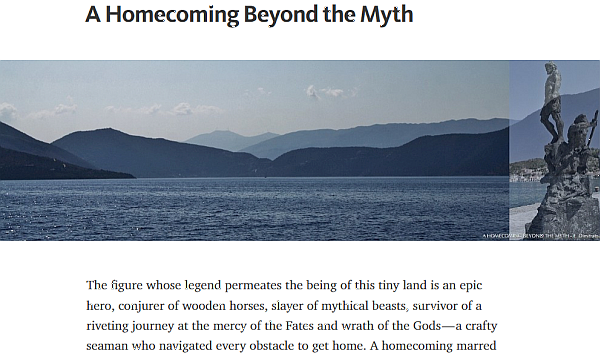
Ithaca, beyond the myth
Vathy, Ithaca
Ithaca, Kefalonia's myth-spinning and weaving neighbor, is just as exquisite and bewitching. And, perhaps, a bit more alluring in its intrinsic charm.

All credit is due to its eternal mistress and her discerning ways!


"Yes, you can twiddle time in Ithaca unraveling the verses of the myth. Or you can spin and weave a new myth—your personal epic..."

➥ Read my full article here:
A HOMECOMING BEYOND THE MYTH

myth of Ithaca Greece

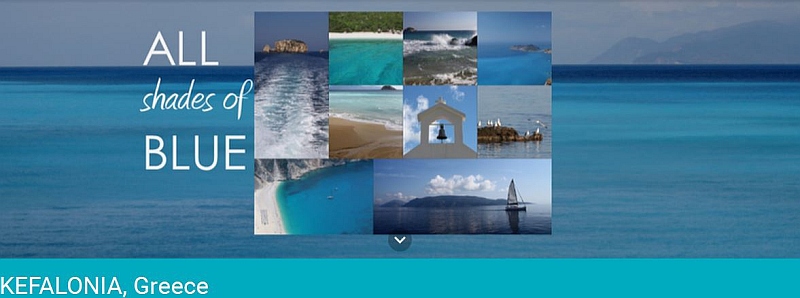
Kefalonia Photo Collection: All Shades of Blue

Kefalonia photo collection
Cover of KEFALONIA COLLECTION on G+

What is this?

A microblog?

A photo album?

A forum where the image tells the story?

All of the above! 

Plus, a place to see and follow links to Kefalonia related posts on my other blogs.

CLICK HERE to VIEW and FOLLOW the KEFALONIA PHOTO COLLECTION ON G+

(As of Spring 2019, the Collection is no longer available as the G+ platform was shut down by Google)

Refocusing on a Genuine Centerpiece


Kefalonia's churches and chapels: the aesthetics and location factor


If I claim to have been to more churches and remote chapels of Kefalonia than most local clergymen—or the devoutest members of their faithful flock—it would not be an exaggeration. 

And there isn’t one Kefalonian church or chapel that is not outstanding in some way, be it the architecture, the interior, the location, or all of the above.

Some are simple but perched on high hills offering breathtaking views that make one think that God had the best real estate agent! Others are so imposing in size or architecture that they dominate their humble surroundings and, aesthetically pleasing as they may be, their pomposity and grandeur is a stark contrast to their mission as places of worship and spiritual reprise.

St. Nicholas Church Svoronata Kefalonia Greece
St. Nicholas Church at Svoronata, Kefalonia

Byzantine meets Baroque


Most Kefalonian churches and chapels house unique treasures of great artistic merit in the form of elaborate ceilings, stunning Byzantine iconography and frescoes, old portable icons painted by well-known artists, historical manuscripts, and stunning wood-carved iconostases featuring intricate baroque elements. 

The bell towers are tall, distinctive and unattached from the church itself following the dictates of western architectural style rather than that of the eastern Orthodox tradition.

Search and you shall find


Many a time— in my photographic adventures or “missions” to record the island’s attractions for work-related projects—I found myself filling memory cards with hundreds of images of undeniably photogenic elements.

But not without a degree of guilt; I felt that I cheated myself (and my readers) since I was capturing the obvious. That is when I began to see rather than just look—and it must have been in the Church of St. Nicholas* in Svoronata.

It is a huge cathedral with one of the tallest bell towers of Kefalonia, an grandiose interior, a mezzanine, and embellished decoration from front to back and top to bottom. One could spend hours here gazing at and photographing the numerous objects and forms of ecclesiastic art.

Having done so and turning to leave, I noticed an unpretentious composition, sitting in the middle of the floor, that seemed out of place in this showcase church of elegance, ornamentation, and artistic excess.

On second thought, maybe it was the only thing that was in the right place…

oil candle Kefalonia church
Characteristic  Eastern Orthodox church fittings at St. Nicholas (Svoronata, Kefalonia): Traditional oil candle (foreground) and ornate floor tiles (background)

Non-extravagant spirituality


A battered wooden bench—not an intricate or fancy hand-carved stool—served as a resting hub for the makeshift oil candle that defiantly claimed its place among the exquisite chandeliers and bronze candle holders. A simple household glass—not a Tiffany or crystal utensil—held the olive oil, and an aromatic beeswax candle—used to reach and light the wick—rested on the side. Both were placed atop a simple, though a bit inappropriate in design, serving tray so as to protect the old bench from possible oil stains! This simple but genuinely beautiful composition competed on an equal basis with the geometric pattern of the traditional floor tiles.

Indeed, this is by far my favorite and most memorable image of this Kefalonian attraction, and one that alleviates my guilt for overly showcasing the obvious.
But habits are hard to break, so here’s the rest of that obvious.

St. Nicholas in Greek Orthodox tradition
Iconography and ecclesiastical art dedicated to St. Nicholas (Svoronata, Kefalonia)

 *note: In Greek Orthodox tradition, St. Nicholas is the patron of seamen. Folklore abounds with accounts of seafarers being pulled and saved from shipwrecks by the Saint. This belief is clearly depicted in the iconography of any church dedicated to Him. Seamen who leave for the faraway seas, and those who attribute their safe return to the Saint, often dedicate items in anticipation and gratitude. Aside from icons, popular dedications include replicas of ships. Some of these replicas are intricate and beautiful works of art, such as the ship replica on the left bottom of the image composition.

Loaded, Colorful Outtakes

Kefalonia sunset, Dias Islet, Avythos
Sunset over Dias Islet, Kefalonia

Decisions, decisions!

Before the ink had a chance to dry (*) on the first photo stories I prepared for the KefaloniaWorld e-Magazine, an unrelenting dilemma surfaced. What do I include and what do I leave out?

Despite the plethora of images available—a result of years' worth of roaming on Kefalonia with a camera strapped around my neck—the problem is not quantity but qualitaty. Take sunsets, for example; I have hundreds of images that I could use. But some of my better sunset images, photographically-wise,  do not mean that much to me.
There, I've said it!
Let me explain.

 My photo safaris


Sometimes I went about my quest with a purpose in mind, correct settings on the camera, time to spare, and conscious choice of location and time so they'd be advantageous in terms of light and sky conditions.

So, I do have heaps of "semi-correct" (**) sundown images. On the other hand, sometimes I was just impelled to point the camera at the horizon and press the shutter button without addressing suitability of lens, settings, or position.

But Kefalonia does that to you.

You may be on the road driving—or occupied photographing sea shells, e.t.c.,—but if you lift or divert your glance from the task at hand, you are overwhelmed by colors, shapes, and light formations that developed while your attention was focused elsewhere.

Then, you act on feeling and instinct rather than on plan. And though the images that result are not picture-perfect, they are loaded with memories of those moments and stories that are hard to put into words.

Like these outtakes... which will probably never make it to the website; I'll keep them to share here.

Case in point: Top photo was taken from Avythos Beach on an afternoon dedicated to collecting pebbles and sea shells since the approaching sunset and sky seemed to be dull, monochromatic, and otherwise uninteresting.
Kefalonia sunset from Gradakia, Paliki Peninsula
Sunset over Paliki Peninsula
More: Photo above was taken from Gradakia Beach, while in the car, listening to music and daydreaming to kill time, waiting for the full moon to rise in the evening sky.
Sunset over Livatho, Kefalonia
Sunset over Livatho

The shenanigans of Kefalonian light


Eyes on the road! That is the wise thing to do if you're driving on the Poros-Argostoli road, and not just in the afternoon!

But as you drive through the villages of Simotata and Vlahata, you should always be prepared. For me that translates into quick recollection of every widening and clearing along the road, and the camera placed on the passenger seat.

No need to worry about lens selection or current settings.
The island's insane light will do all the exposure compensation ever required.

(*)  Although old enough to have used plain paper and ink, I do really mean "before I could save the .doc file on my computer screen" —but it just doesn't look or sound as good as ink drying on the page!
(**) I will never aspire for more than "semi-correct" —lest I fall into the popular trap of shooting or post-processing photos to such correctness that they no longer resemble the island. You know what I mean 😉

Telltale Images of Seasonal Downshift

Autumn in Kefalonia - Avythos Beach
Megali Petra - Avythos Beach, Kefalonia

Signs of seasonal transition


Some are subtle, others stare you in the face.
Some are more colorful than others.

Regardless of their discretion, or lack thereof, the signs of transition from Summer to Fall are everywhere.

⛅ Sunlight adopts a diffused, slightly orange cast; the sea assumes the deeper shades of the blue palette.
⛅ The sky becomes increasingly decisive in color as the temperatures dip and eliminate the summer haze.
⛅ The beach is reclaimed by its natural inhabitants—pebbles, seaweed, and the white froth of bolder waves.
⛅ The sun-scorched rocks finally quench their thirst when the first Fall springs timidly begin to release their waters that flow to meet the sea, forming tiny cascades over green plants on the way.
Fall in Kefalonia - Agios Thomas, Karavados
Agios Thomas, Karavados
 It's a natural slowdown, a change of gears ,not a reversal. This replenishing and welcome repose for nature signals the beginning of the season that, while introvert in character, has a  stunning palette of its own. A bit more muted, perhaps, but certainly more varied.

sandy beach kefalonia
Avythos Beach

'Tis the time to recompose and bask in the tenacious, still warm—though less aggressive—sunlight.

Fall in Kefalonia - Antisamos Beach
Antisamos Beach, Kefalonia
Xenopoulo, Kefalonia
And if the calm sea and deceivingly blue skies lull you into thinking that it's still Summer,
the chrysanthemums everywhere will certainly remind you that it is not.

An Island of Applied Gestalt and Natural Inkblot Tests

Let's have some fun!

Take a quick look at the images and answer the question!
(no cheating, please - just say the very first thing that comes to mind)
Gestalt shapes and ink blots in Kefalonia
Somewhere along the southern shores of Kefalonia. Look for it!
What do you see in the first image? Is it a seal, a dog, a dolphin, an eagle, or something else?
What about the second image? Is it a dog's paw, an elephant's foot, or something else?
Do you see a wimpy cloud or an eagle taking off in the third image?


Gestalt shapes and ink blots in Kefalonia
From Myrtos to Assos, or vice versa!
I'm sure that most of us have had these "eureka" kind of flashes. You know, that cry of joy or satisfaction when one finds or discovers something unexpected. 

Who remembers Behavioral Psy 101?


I have vivid memories of those "splats" of the Rorschach evaluation method that seemed so ridiculous at first, back in college. A person's reaction or response to these ambiguous forms was supposed to reveal significant information for the evaluation of his/her personality and perceptions. 

On the other hand, Gestalt theory—and all its sub theories of grouping, similarity, proximity, emergence, symmetry, closure, e.t.c.,—was the hottest topic in management, marketing and behavioral psychology lecture halls. After all, it did make a difference—or so the instructors claimed—whether a person "saw" an old woman rather than a young girl depicted in the drawing being passed around. Or, seeing a circle in an incomplete arc, or a square in four incomplete perpendicular lines! 

Of course, as diligent students, we memorized all the pertinent facts: the human eye "sees and perceives objects in their entirety before perceiving their individual parts," and our senses do have the "form-generating capability" to fill the gaps in information presented. 

When applied to stimuli in the environment, this simply means that we understand them as a whole rather than the sums of their parts. And this "whole" is greater than the sum of its parts. Sounds very scientific, doesn't it? I'm pretty sure that most of us, at that tender age, wondered how in the name of heavens would all this ever be applicable to anything in the real world. 

Well,  I finally do see the light! 
Gestalt shapes and ink blots in Kefalonia
Storms and birds of prey over Sissia Monastery
Sometimes, though, all this science comes down to seeing with the eyes of the heart.  

And, speaking of hearts...

Gestalt shapes and inkblots in Kefalonia
Mt. Aenos' misty heart
Gestalt shapes and inkblots in Kefalonia
Snow-capped Mt. Aenos as seen from Xenopoulo, Kefalonia

Gestalt shapes and inkblots in Kefalonia sunrise
Sunrise over Poros viewed from Xenopoulo, Kefalonia

Gestalt shapes and inkblots in Kefalonia
The smooth curves forming Poros Ravine viewed from Xenopoulo, Kefalonia
Gestalt shapes and inkblots in Kefalonia
A grafting cut or a message on this walnut tree?
I've learned to decipher the natural inkblots in the Kefalonian sky in a way that would blow my professor's mind:
IT ALL DEPENDS!!!
Gestalt shapes and inkblots in Kefalonia clouds
An aging Greek God looking down on Kefalonia, a vagabond heart, or just a cloud?
Gestalt shapes and inkblots in Kefalonia sunset
Is that an old witch with its back to the Livatho skyline, or a black sheep trying to find its way back home?
Gestalt shapes and inkblots in Kefalonia sunset
A happy poodle following a camel, with both flying over Vardiani Islet? Or, do I need to have my head examined?
Gestalt shapes and inkblots in Kefalonia sunset
At last! An inkblot with only one interpretation: Just another majestic sunset at Avythos Beach!

The Earth Moved.. and then, There was Silence


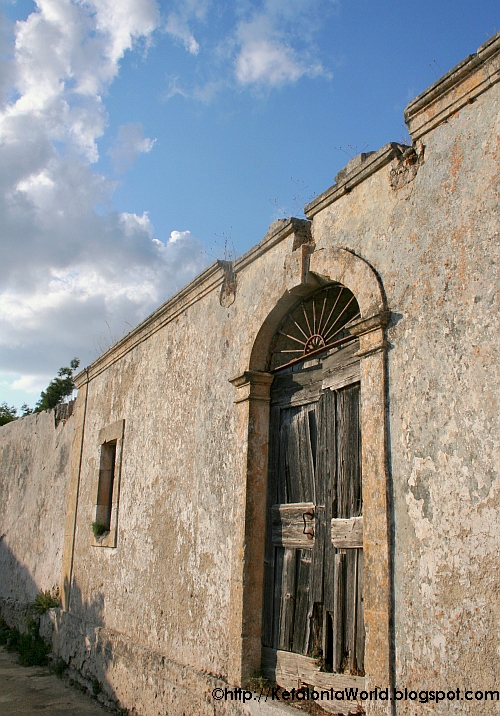
Pre-earthquake Kefalonia
Defiant geraniums thriving in the sun and dressing the wounds inflicted on a traditional Kefalonian home by the merciless earthquake  of 1953 (Vlahata, Kefalonia)

 Recounting a traumatic past

It seems inappropriate for someone born after August of 1953 to write about the most devastating time for Kefalonia— not to mention the risk of sounding superficial.
So, I avoid writing about the massive earthquakes that literally destroyed the island.

Not that there haven't been first hand accounts—on the contrary, I've had plenty—as my parents, grandparents, uncles, aunts were all there. They've relayed detailed accounts of their own encounter with the force that made the earth roar and heave, again and again, until everything was reduced to piles of ruins, clouds of dust, heaps of pain, and unending streams of tears.

Pre earthquake Kefalonia
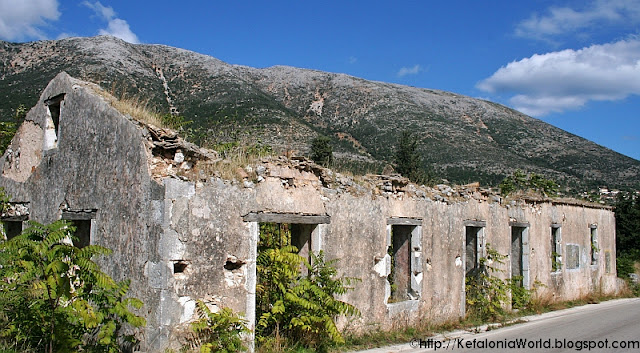
True resistance to the ravages of the elements and time  (on the road to Fiskardo - Erissos, Kefalonia)
 Every account of the horror begins the same way:
❝I remember exactly where I was when the earth started to shake—❞


They all end their narrative with a list of names of  loved ones or neighbors who were buried in the rubble, or were rescued from under it as if by miracle.

No family was spared, although some suffered losses far greater than the destruction of property. The hundreds of lives lost remain a perpetually open wound for the survivors, long after the homes, churches, schools were rebuilt and towns were reconstructed.

>>> 60 YEARS LATER <<<


Today, on the anniversary of the horrendous earthquake that caused more than ceilings to collapse and walls to crumble, I need to write about it for the first time.

I cannot write about the people who were lost, as my immediate family did not lose any members in the destruction.

But I can share with you some representative remnants of the beauty that was wiped out in a few seconds. Remnants of another time and another world, which, to this day, emerge here and there—defying gravity and the relentless passage of time—as reminders of resistance to hardships and triumph in the face of ultimate adversity.  

And, of course, as non-designated but genuine memorials to all those souls who perished. 

Pre earthquake Kefalonia
What remains of the once magnificent church of St. Spyridon is still stunning—in architectural aesthetics and admirable resistance to gravity and the passage of time (Kastro, Kefalonia)
Pre earthquake Kefalonia
Dispersed throughout Kefalonia— and hidden in village alleyways, waiting to be discovered— are some fine samples of traditional island architecture (Pessada, Kefalonia)
Pre earthquake Kefalonia
Wst-facing window of the original church (Sissia Monastery, Kefalonia)
Pre earthquake Kefalonia
Another sample of traditional architecture found on the road leading from Agia Efimia to Myrtos
Pre earthquake Kefalonia
Remnants of the Archangels Church at Old Valsamata Village, Kefalonia
Pre earthquake Kefalonia
Another alleyway, another gem (Pessada, Kefalonia)
Pre earthquake Kefalonia
Ruins of the Dimitratos family cluster of homes at Xenopoulo, Kefalonia
Nowadays, our own "daisy factory"

I'm Back... and Sending Some New Magic Your Way

I feel the need to apologize (once again) for the long hiatus in posting. 
The year following my relocation to New York was a time of adjustment and tremendous workload. Then, extensive and unauthorized copying of material on this blog caused me to  consider shutting it down. However, the driving force behind my decision to continue (Oh, yes!) has been the over 2000 unique visits per month—for each of the months that I've been off the keyboard! I have made some adjustments to the blog security-wise to keep everyone honest...

Having said that, LET'S GET BACK TO OUR BUSINESS OF ENJOYING KEFALONIA, UNCUT & UNEDITED.

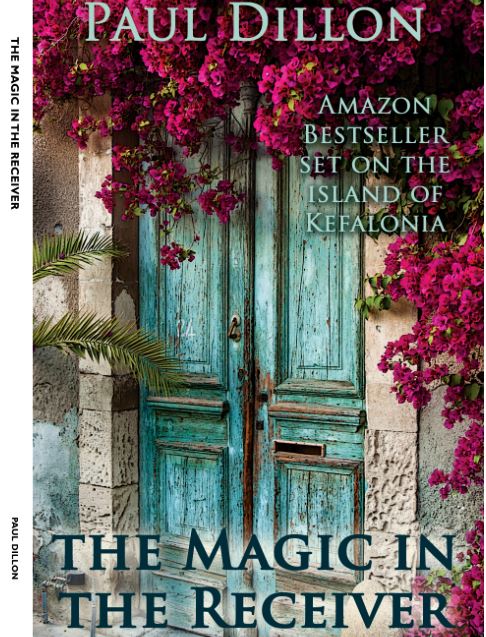
 And I see no better way of recapturing the MAGIC than starting with the gorgeous new cover of Paul Dillon's book THE MAGIC IN THE RECEIVER!
It's so... how can I say this? It's so KEFALONIA!


The Magic in the Receiver book set on Kefalonia
The Magic in the Receiver, and its new cover

Just to bring you up to date: A lot has happened since I first introduced you to the book.
(previous post: The Magic in the Receiver.)

It went on to become an AMAZON BESTSELLER and just about the best advertising Kefalonia could wish for. Suffice it to say that the book was downloaded by over 25000 readers during a 3 day promotion by Amazon in May, shooting up to the #1 position in its category. Nice, Paul!

During this time, Paul also had his guest blog hosted on the official site of The Greek National Tourism Organization (GNTO).
All great stuff!
The Magic in the Receiver Kefalonia World
My tiny contribution to the back cover
Not to mention that I got to brainstorm with Paul a bit—over skype as we are on opposite coasts of the U.S.—and had the chance and the honor of getting to know (virtually, for now) this gentleman of a writer.

I take this opportunity to thank him publicly for including my humble but heartfelt words on the back cover of the book edition for Greece.

💬 and a little note for the suspicious minds out there: no, this is not a work project or a commission for me... It's a labor of love, an honor, and a pleasure—in that order! 💬

Kefalonia's Holy Land


St. Gerasimos Church at Omala, Kefalonia
St. Gerasimos Church at Omala Valley, Kefalonia

Kefalonia's significant holiday


October 20th is the most significant religious holiday for Kefalonia as the island honors its patron saint. The commemoration festivities for Saint Gerasimos are held over two days. Then, the Valley of Omala comes alive with the devout, the curious, and the last tourists before the season officially shuts down. Some seek a cure or a miracle; others use the occasion as a family outing to enjoy the festivities. 

A matter of identity, beyond faith


Most Kefalonians have a peculiar relationship with their patron saint, sometimes contradictory to their everyday religious beliefs. It is a relationship that borders on familiarity and possession!
And tradition, of course.
And identity.
Besides, it is hard to find a family in Kefalonia without a member named Gerasimos.
St. Gerasimos Convent, Kefalonia
St. Gerasimos Church, Kefalonia
Litany at St. Gerasimos of Omala, Kefalonia
The Litany at Omala Valley, Kefalonia
Litany at St. Gerasimos of Omala, Kefalonia
Marching bands head the procession at St. Gerasimos Litany (Omala, Kefalonia)
Litany at St. Gerasimos of Omala, Kefalonia
Marching bands head the procession at St. Gerasimos Litany (Omala, Kefalonia)
Litany at St. Gerasimos of Omala, Kefalonia
Marching bands head the procession at St. Gerasimos Litany (Omala, Kefalonia)
St.Gerasimos, Kefalonia
The Convent grounds at St. Gerasimos, Kefalonia

Wrong Place, Right Time

Sunset of Southeastern Kefalonia
Sundown in Southeastern Kefalonia
Kefalonia gets away with quite a lot that other places could not. 

For example, take sunsets. In most places you'd have to be facing west to enjoy the spectacular colors of the sun calling it a day. You'd have to rush to be at the right place at the right time. 

In Kefalonia, however, all you need to address is the issue of time—the right time. Everything else just seems to fall into place, color, texture, and mood.

Poros, Kefalonia sunset
Poros, Kefalonia (Ithaca Island on the left)
Poros, Kefalonia sunset
Poros, Kefalonia

When in Skala, Be on the Lookout!

Sometimes I get a bit arrogant about knowing everything there is to know about the island. I don't mean the usual tourist fare, I mean those it places that make the difference. Fortunately, once in a while I get to eat humble pie—sweet and served up by an old timer, nonetheless.
Views from the Vardiola at Skala, Kefalonia
Skala, Kefalonia

Oops! I missed this one

Take the small lookout point over Skala Beach, next to the Roman Villa.

I've passed it by dozens of times, have seen dozens of tourists posing for pictures, and, I've driven on, not giving it a second thought. Just another miniature square overlooking the sea, right? Let them folks go about their business and I'll go on with mine.

That was my perception of the spot till two years ago, in mid July. I had the privilege of a grand tour of Skala by one who knows it well. Mr. Panagis Travlos, a native of Skala, had served  as an officer of the local community and was eager to show me anything and everything I could endure to see before succumbing to the imminent heat stroke. Of course, he treated me as a visitor; being a mere Kefalonian, in the generic sense, did not qualify me as a local!

"Naturally, you know the Vardiola, where Skala's future was decided," he asked in the most casual way.
Now, I can be as quick on the uptake as the next person—even under grueling temperatures—but this one had me baffled.
"Yes, of course," I stuttered, trying to figure out what he was referring to.

No, this is not another miniature square

A vardiola is a Venetian term for "observatory" and there are quite a few ruins of vardiolas on Kefalonia Island, dating back to the Venetian Era. They are of discernible architecture and are (usually) perched high over the sea. Vardiolas served as lookout posts for observation of the seaways (for pirate vessels, perhaps). In modern times, locations offering a vantage, protected view of the sea are also referred to as vardiolas. I had no idea at the time!

Views from the Vardiola at Skala, Kefalonia
Skala and beyond

I get educated by a wise and proud man

So, back in Skala, on that hot July day, I was trying to envision whether I had seen a construction in the area that fit the bill. Mr. Travlos must have noticed my perplexed look and went on to explain as we made our way to the spot I had ignored so many times.

Prior to the devastating earthquakes of 1953, the village of Skala was quite a bit farther up the hillside, it was not a waterfront settlement. Most of the land around the village, including its present location, were potato fields! Yes, at the time, this was Skala's best-known product. The proximity to the sea and the sandy soil make for the most delicious potato variety.

The earthquake left no stone unturned and the citizens of Skala had to decide how and where to rebuild their village. Some wanted to rebuild at the original location so they could be near their fields and stock. Others argued that the village should be moved to the beachfront as this provided ease of access to the water for, among other things, bathing their herds of sheep before the annual shearing! Plus, the threat of a pirate attack was a thing of the past, an advantage not negligible in itself!

According to Mr. Travlos, around the time of the impasse, Skala was visited by the then Minister of Public Works (and later PM and President of the Republic), the late Konstantinos Karamanlis, as head of a commission for the reconstruction of the island.
As he sat to rest at the vardiola's present location and overlooked the span of Skala Beach, he (according to witnesses) said "You see where the sheep are running free now? I predict that in a decade or two, people from all over Europe will come in hundreds to enjoy this beautiful sea. Yes, the future of Skala is on the water, it is decided."  

And so it was decided, and so it was done.
Views from the Vardiola at Skala, Kefalonia
Overlooking the Ionian Sea from the Vardiola at Skala, Kefalonia
Views from the Vardiola at Skala, Kefalonia
Lookout point to all shades of blue
Lookout to the past and the future

Next time you're in Skala you may want to stop at the Vardiola and try to imagine potato fields behind you (and where the Main Street is today), and sheep sunbathing ahead of you (sans the beach chairs, umbrellas and sunscreens).

Try to visit the old settlement, there are some interesting ruins, a fountain, and some old churches of charming interior design. Though removed from the seafront, the old settlement offers far superior, panoramic, views compared to present-day Skala. And, don't forget to get chummy with a local, he may point you to an establishment that still serves those yummy Skala potatoes. Though the fields are now integrated into the modern settlement infrastructure, there is still  limited production, saved to be consumed by family and close friends.

Note: At the risk of dating myself, I'll share with you my first encounter with Skala. I remember hitching a ride with some of my schoolmates, on the back of an open truck that was going to Skala to pick up sacks of its renowned potatoes. My first view of its waterfront was countless sheep sleeping on the beach and under the pine trees. We got scolded upon our return for going, without permission, to a place so secluded that we could never find our way back home had we missed the truck's departure! 
Ah, time flies...
And changes everything...